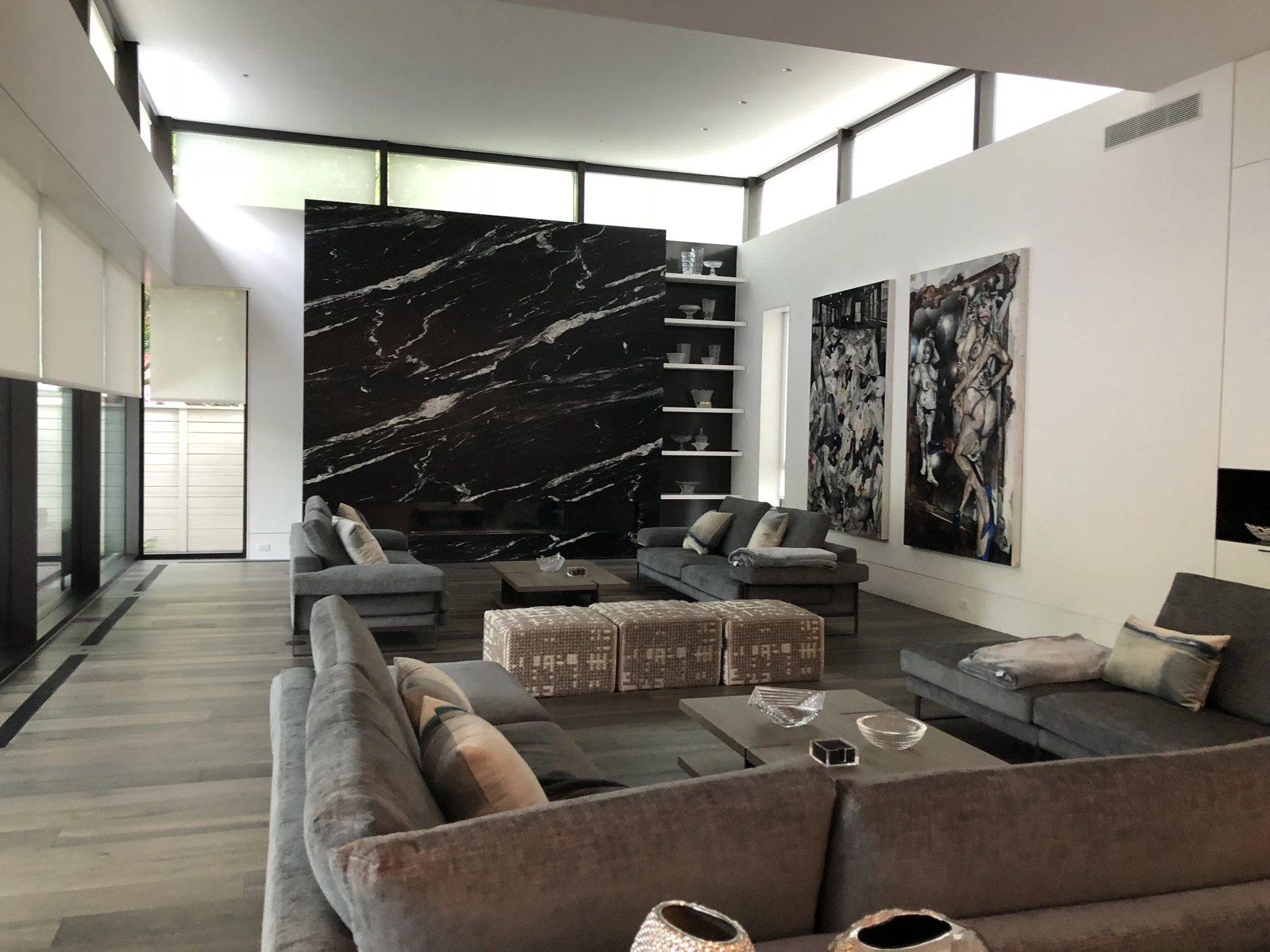
Motorized shades and blinds
Shades that raise and lower quietly through the day, one window at a time or the whole house together.
What you get
Daylight when you want it, privacy when you don’t.
- 01
Every window at once
One button raises or lowers a whole room, or a whole floor.
- 02
Windows you can’t reach
Tall windows, skylights and the one behind the bathtub move as easily as the rest.
- 03
Shades that follow the sun
They lower against afternoon glare and open again in the evening, which is easier on floors, furniture and art.
- 04
Privacy at dusk
The street-side shades close at sunset, whether you’re home or not.
- 05
Quiet and tidy
No cords or chains, and hems that line up across the room.
The right height for the time of day
Lowered to cut the glare, with the view kept.
Illustration. Try the buttons.
What’s involved
What goes in, and how it fits.
Most of it is out of sight. These are the parts you’ll hear us talk about.
Fabrics
Sheer, light-filtering or blackout, chosen with you or your designer.
Motors
Wired power where walls are open. Battery power for finished rooms.
Pockets and fascias
The roll hides in a ceiling pocket or behind a slim fascia.
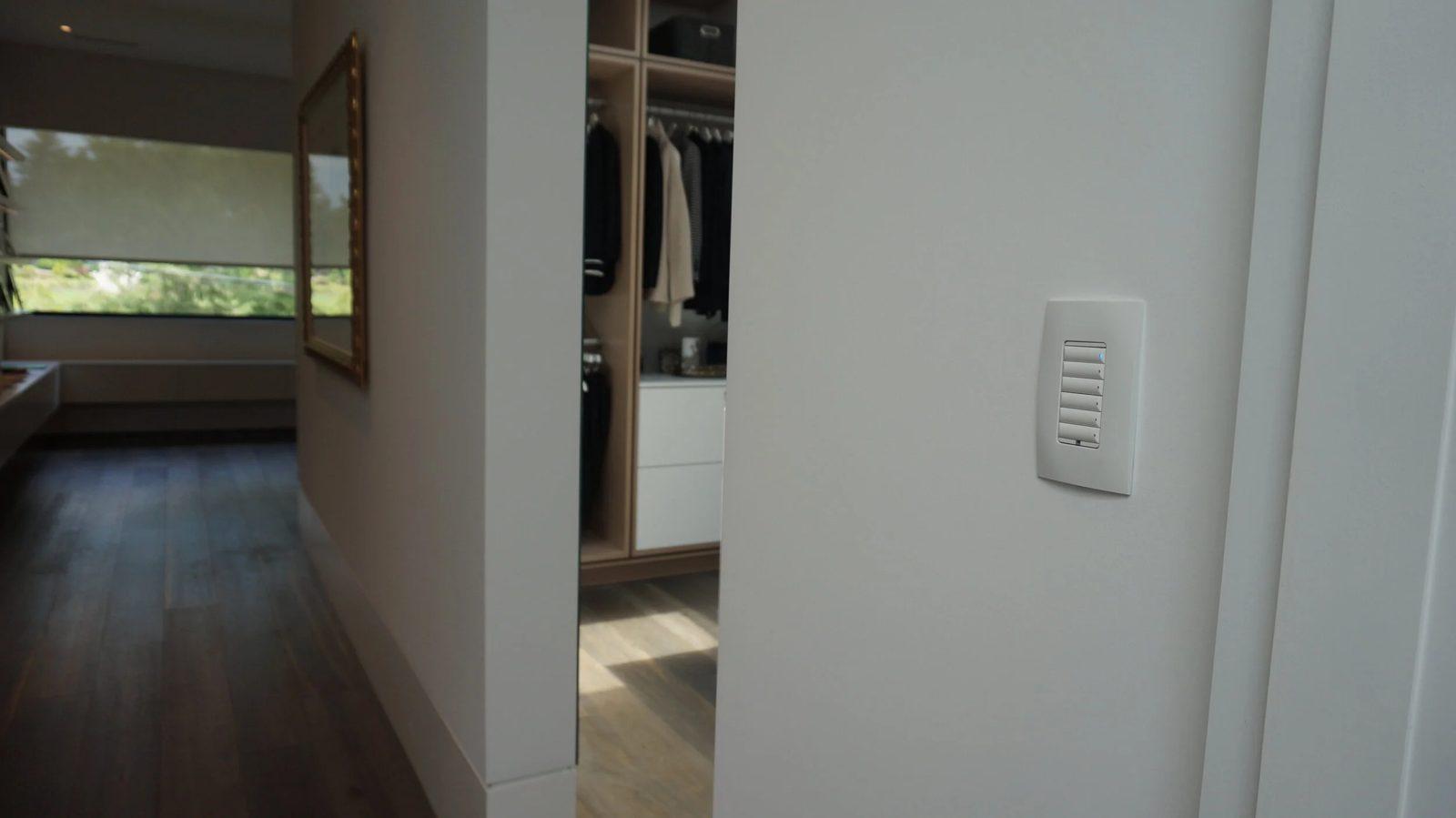
Keypads and remotes
On the wall beside the lights, or a small remote on the nightstand.
Schedules
Set by the time of day and by sunrise and sunset, which shift through the year.
The app
Every shade on your phone, at home or away.
New build, renovation or finished home
In a new build, pockets and wiring are planned with your architect before the ceilings close. In a finished home, battery-powered Lutron shades go up with no wiring.
How it works with the rest
Shades are the other half of lighting, and they work best on the same buttons.
- Motorized shades
The shades, fabrics and schedules on this page.
- Lighting control
Lights and shades on the same keypad, in the same scenes.
- Home theatre
Blackout shades close when the movie starts.
- Home automation
“Away” lowers the shades along with everything else.
How a project runs
From the first conversation to handover, and after.
- 1
First conversation
You tell us how you live in the house and what you want it to do. At your home, over your plans, or at the Experience Centre.
- 2
Design and proposal
We measure every window and bring fabric samples. Pockets and power are agreed with your builder or designer. You get a written proposal before anything is ordered.
- 3
Installation
Shades are made to measure, then hung and levelled so the hems line up across a room.
- 4
Handover
We set the stopping points, the scenes and the schedule with you, and adjust them once you’ve lived with the light.
- 5
Care
After handover, a Care plan keeps the system up to date, and we can see and fix many problems remotely.
Questions
What clients ask about shades.
Can shades be added without new wiring?
Yes. Battery-powered Lutron shades need no wiring. Wired shades suit new builds and renovations, where power can be run to each window.
How long do the batteries last?
It depends on the size of the shade and how often it moves. We’ll tell you what to expect for yours before you decide.
Which kinds of shades and blinds do you motorize?
Roller shades, honeycomb shades and wood blinds. Which suits depends on the window and the room.
Can I still move one shade by itself?
Yes. Every shade can be moved alone, with its room, or with the whole house.
Do they work with my lighting or Control4 system?
Yes. Lutron shades work with Lutron lighting on the same keypads, and with Control4.
Can you work with my designer on fabrics?
Yes. We bring the sample books, and your designer chooses what suits the room.